patching...
Welcome back, Patch Blogger!

Forum Held to Discuss Ways to Fend Off Obamacare

Panel discussion focused on ways to block health care mandates.


The decision in June by the Supreme Court to uphold President Obama's Affordable Care Act left many people, from coast-to-coast, stunned. But it didn't take long for states and conservative groups to start planning ways to repeal that decision or fight its implementation.

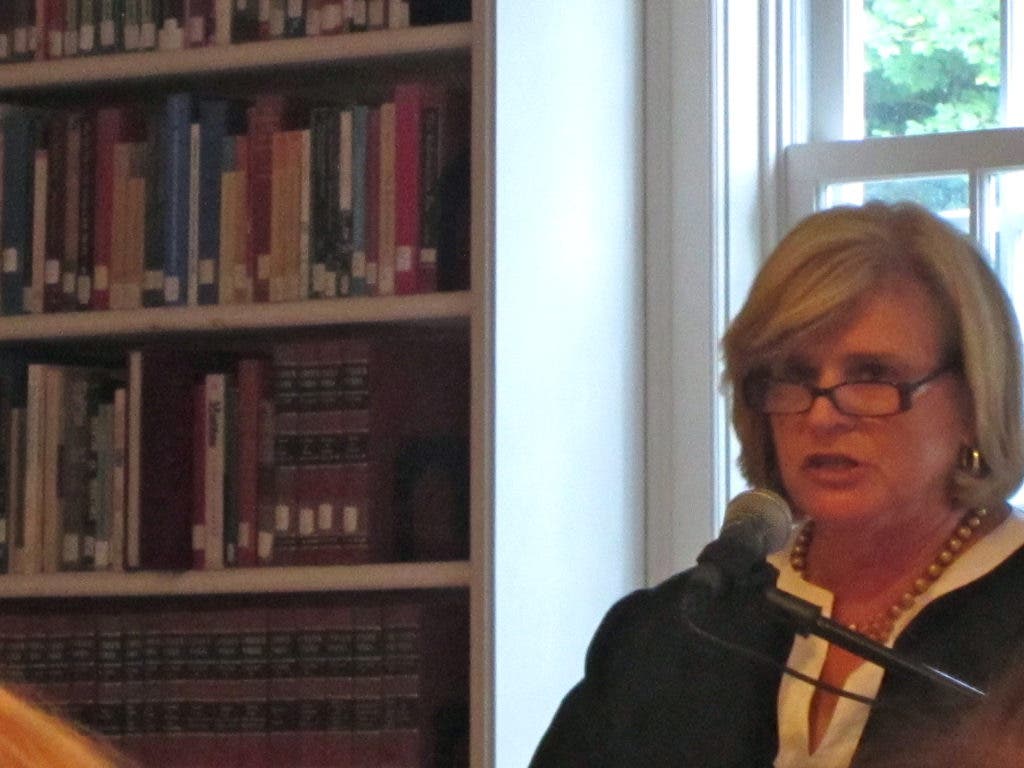
On Thursday evening, about 60 audience members packed the Humanities Room of the Library at Thomas More College of Liberal Arts for an “Obamacare Resistance Panel,” sponsored by the Republican Liberty Caucus of New Hampshire and co-sponsored with Cornerstone Policy Research, First Principles, and FRCAction.

Each panelist – William O'Brien, the House Speaker; Andrew Manuse, a state rep. from Derry; and Connie Mackey, president of FRCAction PAC – was given several minutes to present their position on the ruling and discuss how the state or, for that matter, the country, can continue to fight the health care program ruling.

Following the panel, the audience was invited to ask the panelists questions.

O'Brien focused his remarks on how the passage of Obamacare will affect the New Hampshire Medicaid system, forcing a massive increase in money the state will have to pay into the system, he said.

Currently, of the residents in the state eligible for Medicaid, about 60 percent participate. Of the 50 percent who don't, O'Brien said 98 percent have their own insurance and only 2 percent of those eligible for Medicaid aren't ensured.
Under Obamacare, O'Brien said, the end-result is going to be a $1.875 billion increase over the next few years. O'Brien said, at that rate, if New Hampshire kept spending the way it is now, the Obamacare Medicaid mandate would make up approximately 90-95 percent of the state's budget.

“As a state official you have to say we're going to do whatever we can to prevent that from happening,” O'Brien said.

He said New Hampshire has taken steps over the last legislative session, which Manuse went into more detail about, to protect itself from Obamacare.

He said the state passed a bill (HB 1297) that prohibits the state of New Hampshire from participating in a state health care exchange.

“We also passed several statutes that require legislative approval ... before Health and Human Services can change any policy, any standard, any regulation,” O'Brien said.

Manuse, who is also the executive secretary to the Republican Liberty Caucus, focused his remarks on the measures the New Hampshire Legislature took this year to try and prevent itself from feeling the full effects of the health care law if it came to pass.

He said he was shocked to hear the decision that the Supreme Court had upheld the law.

Manuse said HB 1297 came as a result of an insurance official that informed him the state needed to set up an insurance exchange in order for Obamacare to work, and that set Manuse into action in drafting a bill that would prohibit the state from taking such action.

“It will be incumbent on the next legislature to use the teeth that we gave them and really stop Obamacare from being implemented.”

Manuse said the federal government is going to look for every loophole they can to get around HB 1297.

“I'm praying to God, the right place to do it I think, that we do have Republicans elected to both Congress and to the state Legislature so that we can appeal or amend Obamacare,” Manuse said.

Manuse also spoke to the importance of a free market healthcare system. None of it will change overnight, he said, it took 100 years to get here and it's going to take 50 to 100 to get back, but the state and federal government have got to start now, he said.

Related Topics: Andrew Manuse, Bill O'Brien, Connie Mackey, Heritage Foundation FRCAction PAC, Obamacare Resistance Panel, and Republican Liberty Caucus

Gary A. Gahan

7:47 am on Friday, July 20, 2012

Let's see what would happen to automobile insurance if we had all these various state "mandates" imposed on us, our choice of carriers in NH was limited to 2.5, coverage included any and all conceivable "preventative" care for the car, when your car was damaged and needed repair you would take to a "repair hospital" where you would not know what the total cost of the repairs would be because the insurance company would just pay for it, etc. You would not have any "customized" approaches to purchasing your coverages and your rates would be community rated no matter where you lived or the community risk factors. Do you think that this would be a much better approach since it would be using the same mantra of purchasing automobile insurance as is used to purchase health insurance.......do you think pricing pressure would go up or go down?

Reply

Jack Rothman

8:54 am on Friday, July 20, 2012

Maybe if the NH Legislature started spending time on how we can help expand healthcare coverage to the millions who need it, rather than take away coverage to those under 26, to those with "pre-existing" conditions, to those without employer insurance coverage, to those the insurance company would drop, etc. it might be a better use of their time - and ours. Uninsured people go the the Emergency Room and are treated. We all pay for that.
The Republican idea of a mandate for all is the best way to bring everyone into the insurance cost pool. Very similar to auto insurance. If everyone has it, the costs are lower for all.

Reply
Comment_arrow

Carolyn McKinney

9:35 am on Friday, July 20, 2012

Obamacare was a (temporary) gift to the insurance companies, who now have many millions more new (forced) customers. But insurance companies are the PROBLEM, not the solution. It is the fact that most people pay little or none of their own medical care costs that has created distortions in the market. And it is the enormous discount negotiated with insurance companies that is unjust toward those without insurance—because the prices are so high without insurance (the uninsured typically pay 3x the amount that an insurance company would pay for the same service).

Instead, as all the speakers pointed out last night, we must really make insurance be INSURANCE again. Catastrophic coverage when something goes wrong. Not paying for every trip to the doctor and every test, which drives up the demand (why not go to the doctor if someone else is paying the bill?) without increasing the supply, which of course drives up the cost.

As Speaker O'Brien said last night, with liberty comes personal responsibility, so we must as a people began taking responsibility for ourselves, which includes paying for doctor visits, lab tests, and other routine medical care just like we pay for oil changes on our cars. And we must also be responsible to one another through charity—which is NOT government forced redistribution, but rather is voluntarily giving of our own money and time to help one another, which binds us to our neighbors and fosters a rich and vibrant civil society.

Comment_arrow

Gary G. Krupp

10:18 am on Friday, July 20, 2012

Ms. McKinney is exactly correct! Insurance has morphed into a third-party paying agency rather than one that uses the the capital of its subscribers along with the relative probability of expensive procedures to keep catastrophic health events from financially sinking those members. This distortion has served to change the way Americans look at health care coverage. Rather than a wise hedge against future health risks, many now insist that insurance should pay for everything from a hang-nail to a heart-attack with low or no deductible. This kind of mindset puts incentives in the wrong place and promotes overuse of the system.

Comment_arrow

Andy Schneider

10:47 am on Friday, July 20, 2012

Companies in the private sector today are building their insurance coverage around encouraging healthy lifestyles. Employees get incentives for taking health screenings so they can be made aware of potential health issues. Programs are expanding to encourage healthy lifestyles - diet, exercise, keeping active - with employers paying some of the cost. Employers are also offering fully covered physicals and annual tests. Why? Because it makes employees aware of potential health issues and makes them more aware so things don't explode into larger problems - which WOULD be catastrophic or expensive if gone unchecked. IMHO, going back to a true "insurance" system, as described by some in this thread, would result in more significant expenses down the road and ultimately add MORE cost into the system. These changes were underway long before "Obamacare" came into view....

Comment_arrow

Gary A. Gahan

11:07 am on Friday, July 20, 2012

Jack you are apparently very unaware that NH legislature under BOTH political regimes has addressed insurance for all for a long time with NO restrictions on availability and accessibility to all and that coverages had been extended to those attending college up to as far as age 25, however, agreeably it did not address those under that age who left school at 18 and pursued other avenues. None of this addressed the cost of health care even though accessible to all as the cost had to actually go up from an actuarial stand point to have insurance coverage maintain viability.....the uninsured were still forced then to use hospitals and providers since the actual insurance coverage was unaffordable. Insurance never has addressed or incentivized healthy lifestyles since it has paid for everything irregardless of cost or any individuals lifestyle choices that may be contributing to the causes....obesity, smoking, excessive use of alcohol or illicit drugs. If you had insurance that gave you a financial incentive for healthier lifestyles and penalized people who chose to live ongoing unhealthy lifestyles would that work better for you? We are a long way still from any viable solution and Obamacare is not there even though there are some very good parts such as not limiting lifetime benefits, coverage up to age 26, some of which had already been in place around the country.

Comment_arrow

Gary G. Krupp

11:55 am on Friday, July 20, 2012

In my view, healthy lifestyles are an important part of controlling costs but it is not where we should start. A better way is to allow more market forces to work on the system. Today, consumers of health care are too insulated from its costs and the health care choices they make are based on coverage plans, not perceived value. As a consequence, there are no real forces driving the system to be more efficient in delivery of services. We would be better off if companies stopped offering health insurance to their employees all together and just increased employee pay. This way individuals would shop for insurance (or become self pay) on their own. Natural groups and packages would form that would promote the healthy lifestyles that others are arguing for to control costs (just like safe driver discounts that exist in auto insurance). At that point, the problem becomes a much more manageable one of dealing with the small segment of the population that is truly needy. To that group, I would look for charities, not the Government, to take on the lion's share of the support. Charities are much more nimble and are better at sniffing out fraud and scam artists than the bureaucracy is.

Comment_arrow

Jeannine Stergios-Richardson

1:30 pm on Friday, July 20, 2012

People can opt out of Obamacare and pay a fine instead. These people will still show up at the ER. Obamacare solves nothing and only serves to provide less care for those who pay already. I have used liquid oxygen for over 6 years now andI have Anthem Blue Cross. I received a phone call from my oxygen provider last week informing me that he would not be providing liquid oxygen after December 31st because MEdicare was no longer covering it. So - here I am already being affected and I have my own insurance. Tell me this boondoggle isn't going to lower the standards and cost us much more. A disaster!

Gary A. Gahan

11:12 am on Friday, July 20, 2012

Andy Schneider's comments are "right on" however these concepts are only available and working within the larger employer community that have the ability to partially or fully self insurance and are allowed to tailor a specific plan to their company and build in particular incentives. Unfortunately small employer groups of generally 100 or less are limited to "boiler plate off the shelf" plans that the various 3 insurance companies offer subject again to NH state mandates with a take it or leave it approach.

Reply

Gary A. Gahan

1:09 pm on Friday, July 20, 2012

Gary Krupp you are well on the way with this one......yes this "employee" insurance issue was created in the 1930's as a result of wage and price freezes imposed by you know who......so the answer to circumvent this was employee benefits such as health insurance and pensions which were not considered "compensation" in violation of the wage freeze. People would be better off with their own personally and individually tailored plans that are not at the behest of the employer so there would be no worries about benefit changes or losses between employment situations or moving to another state, etc. This would be OWNED by you and you alone and carried with you and changeable up and down in benefit levels just like I am free to adjust my cell phone benefits to my changing needs......too much innovation for the public and employers and of course the "guvment" to understand? ~ LOL

Reply

John Nail

7:41 am on Saturday, July 21, 2012

@jeannine-stergios-richardson
Medicare still covers your oxygen. You were given wrong info.
http://www.medicare.gov/Publications/pubs/pdf/11405.pdf
Read the above and you will see

Reply
Comment_arrow

Gary A. Gahan

10:06 am on Saturday, July 21, 2012

John thank you kindly for this posting. I do hope that Jeannine picks up on this issue. In reading through the article it still seems so senseless that this equipment being rented by Medicare pays for it many times over the way the system works! But someone who needs oxygen should get it irregardless.....or will this become the advent of euthanasia under Obamacare.....it happened in Germany in WWII so we should think that it would never happen here!

Leave a comment